There She Goes There She Goes Again Closer to My
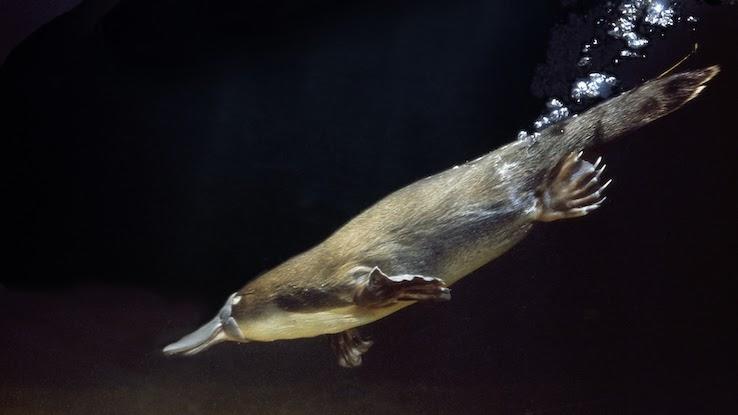
Venomous spurs, retractable webbing, biofluorescent fur and milky sweat? It sounds like a roster of the inelegant powers of one of the most ungainly superheroes imaginable, only they're actually characteristics of a creature that'due south been puzzling scientists for years. One of the nearly famously weird animals in the earth, Australia'southward duckbilled platypus, has evolved with these and other foreign features and every bit a result is thought to be ane of the oldest mammals existing today.
At kickoff glance, it looks like the platypus was cobbled together from leftover parts of beavers, ducks and even snakes — just why? Recently, researchers from the University of Copenhagen performed a unique genome-mapping technique to better understand the platypus' genetic structure, with the ultimate goal of figuring out how and why it evolved the way it did. This process has gotten scientists a few steps closer in discovering the origin of some of the animate being'due south unique characteristics. So what exactly have they learned?
What About the Platypus Provoked a New Study?
In early on 2021, platypuses began appearing in news headlines seemingly out of nowhere — but this wasn't a random decision on behalf of media companies. It was the outcome of a written report published in the scientific journal Nature — a study that provided what's now the virtually comprehensive sequence of the platypus' genome so far. Why is this so meaningful? Co-ordinate to Cara Giaimo of The New York Times, "By diving into [platypus] DNA, researchers can uncover the genes and proteins that underpin some of these creatures' distinctive traits, and better sympathise how mammals like us evolved to be and so dissimilar them." In essence, the more we can detect out about how the platypus evolved to be so distinctively strange, the more than we tin learn nigh our ain evolution in the process.
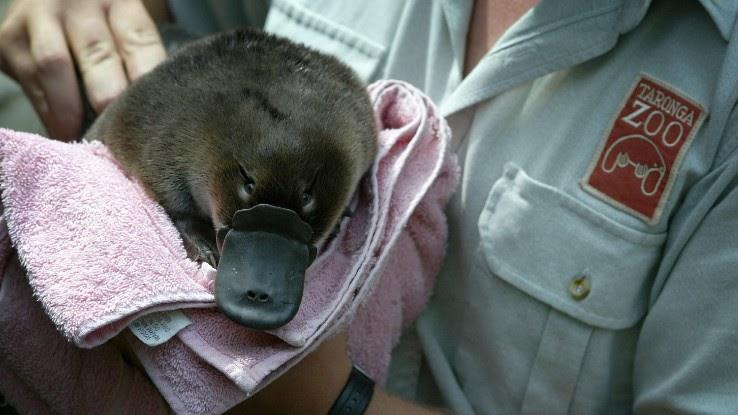
Thanks in big function to their multitude of bizarre qualities, platypuses take been the subject of many studies and of previous genome-mapping efforts. Only what prompted scientists to reexamine this mystifying monotreme? New technologies accept fabricated it easier to map the platypus' chromosomes and the factor placement on them, and, naturally, scientists wanted to take advantage of that. By 2008, researchers first sequenced the genome, and until the nigh recent Nature report, only most 25% of the animal'southward genes had been mapped. Thanks to advancements in genome-mapping techniques, the January 2021 written report helped researchers pinpoint the locations of 96% of the animal's genes.
Only there's some other side to all of this. The platypus has some incredibly strange features — at least, for something that'southward classified as a mammal — and scientists desire to know why. When it was first discovered in the 19th century, many scientists in Europe thought the platypus was imitation. Nonetheless, information technology was proved not simply that the platypus is real but that it's one of the most unique creatures on the planet. And scientists wanted to discover equally much as possible well-nigh its weirdness.
New Platypus Research Is In — and It's Fascinating
So, just how strange is the platypus? A major feature that sets it autonomously from both mammals and reptiles is that it lays eggs instead of giving alive birth merely feeds its babies with mammary glands. However, the milk isn't delivered through nipples; a female parent platypus sweats it out, and her babies lick it out of her fur.
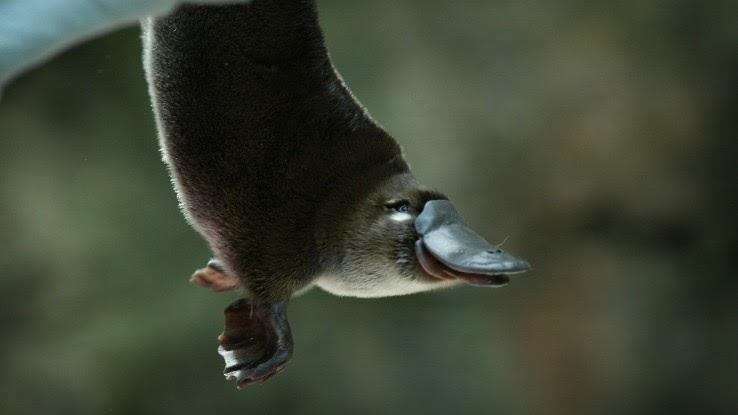
The platypus has accomplished these seemingly contradictory evolutionary feats because of the genes it inherited. There are three vitellogenin genes in beingness, each of which plays a role in a female person beast's power to develop eggs. Chickens have all 3 of these genes, and the platypus has lost two of them. This sole remaining gene allows the animal to lay eggs. However, scientists call up that the platypus losing the other ii genes resulted in its ability to produce milk via "sweating."
Most mammals don't have vitellogenin genes; instead, they take casein genes, which are responsible for producing a protein that's a major component in mammalian milk. The latest research shows that platypus has casein genes in add-on to 1 vitellogenin gene, and that the composition of platypus milk is genetically like to the milk humans, cows and other mammals produce.
Another odd trait of the platypus is that these animals are built-in with teeth. All the same, as they mature, the teeth autumn out and never grow back. Instead, the animals use two horned plates in their mouths to break down their food. The recent study shows that the platypus most likely lost its teeth around 120 million years agone, which is also when it lost four of the eight genes responsible for tooth development.
Why Is This Information So Important?
What sets the report autonomously is that it was conducted using advanced gene-sequencing technology that was a combination of several cutting-edge methods. For the first fourth dimension ever, a inquiry squad was able to map an nigh consummate genome of the platypus. This map involved the chromosomal levels of both the platypus and its cousin the echidna — another monotreme, but one with porcupine-like spikes. These species are the simply two current living members of the monotreme family, which is distinguished by its singular opening for urination, defecation and reproduction. These tests filled in around xc% of the knowledge gaps that existed from previous tests.
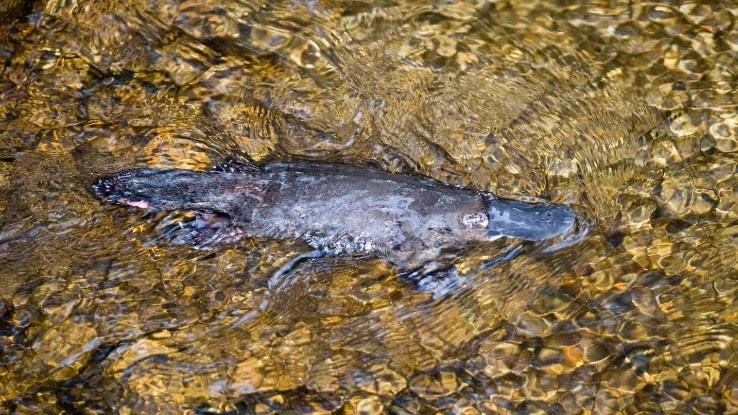
For scientists to amend understand the unique aspects found in the monotreme genes, they also included tests in which they performed gene cross-comparisons to other species. These other species included humans, rats, Tasmanian devils, lizards and chickens.
While the University of Copenhagen published the paper, this project involved scientists from effectually the world. The University of Adelaide in Australia and Zhejiang University of Cathay also contributed work to the project in a global attempt.
The results of this international scientific piece of work are that scientists uncovered a few important answers to questions about how the platypus adult some of its more bizarre features. This hard work of decoding the platypus' genome has helped researchers amend understand how other mammals — including humans — evolved. This genome may concur the key for scientists to learn how and why placental mammals evolved into animals that give live birth instead of laying eggs. Some other piece of our evolutionary puzzle may soon slot into identify.
davistwouldes1954.blogspot.com
Source: https://www.reference.com/science/why-is-platypus-so-weird?utm_content=params%3Ao%3D740005%26ad%3DdirN%26qo%3DserpIndex

Post a Comment for "There She Goes There She Goes Again Closer to My"